
EUGENE, OR — Yesterday, Commissioner Danielle Bethell presented at the Association of Oregon Counties (AOC) Annual Conference on the dangers of kratom, its concentrated derivative 7-hydroxymitragynine (commonly called “7-OH”), and recreational nitrous oxide. The session for county leaders from across Oregon called attention to the growing dangers of these easily accessible products, especially among youth. County commissioners discussed the increased use of these products, including their physical effects, what medical providers are seeing, and current federal and upcoming state legislation.
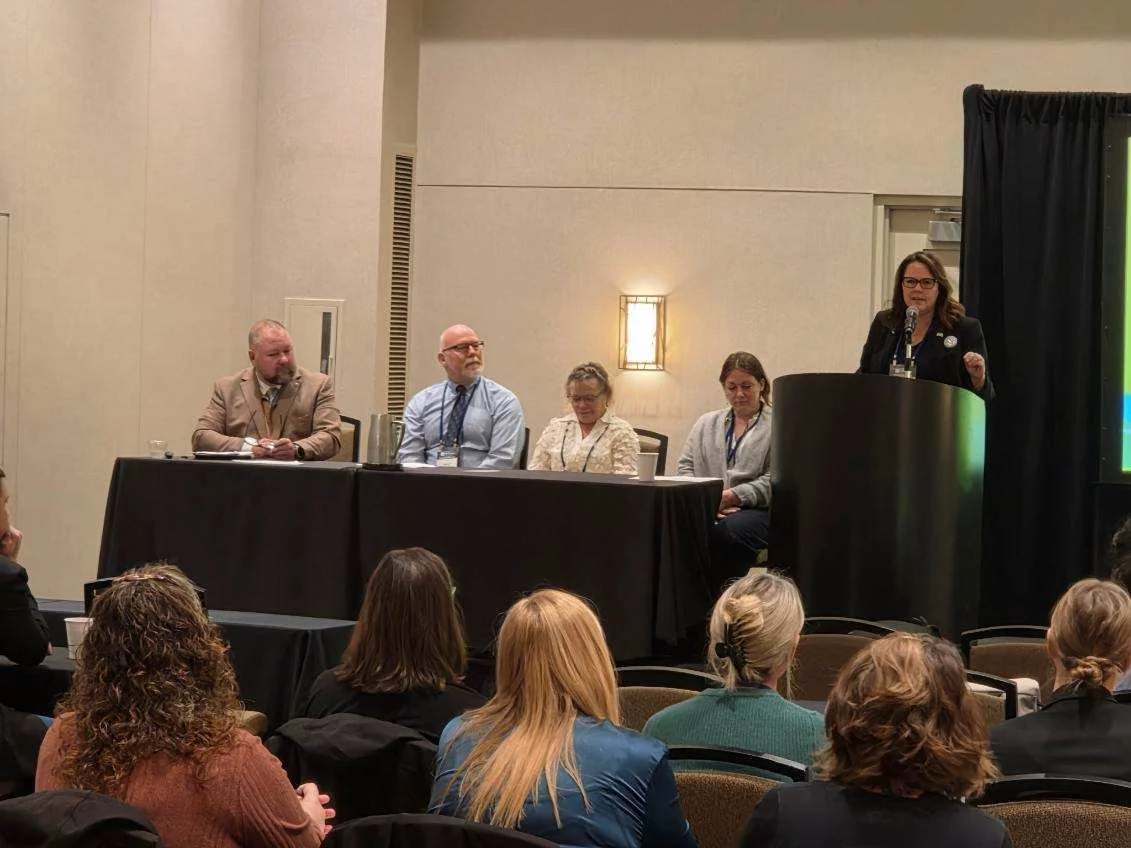
"These brightly colored products are sitting on store shelves next to energy drinks and candy, and so many parents and teens have no idea how dangerous they actually are," said Commissioner Bethell. "Counties are on the front lines when someone overdoses, ends up in the emergency room, or develops a dependency. We owe it to residents to raise awareness and close the gaps that let these products reach our kids."
Neither kratom nor 7-OH (a potent compound found in kratom often sold in powders, capsules, or beverages) is approved by the U.S. Food and Drug Administration for any medical use. Marion County Health & Human Services has warned that the side effects of kratom and 7-OH can include nausea, vomiting, liver damage, high blood pressure and trouble breathing. Use can also lead to opioid-like addiction and dangerous drug interactions. Additionally, products can be contaminated with fentanyl, heavy metals or salmonella.
Kratom also poses serious risks during pregnancy. Babies exposed to kratom or 7-OH in the womb can be born with withdrawal symptoms, a condition known as neonatal abstinence syndrome. Because standard toxicology screens typically don’t detect kratom, those symptoms can go unrecognized.
Nitrous oxide, often sold as “whippets” in colorful, fruit-flavored canisters, can cause severe neurologic, cardiovascular, and psychiatric harm with repeated use. The Oregon Poison Center reported 56 nitrous oxide cases in 2024, up from 15 in 2023, and 60 cases in 2025. The Oregon Health Authority has linked at least 30 deaths statewide to nitrous oxide between 2021 and 2024.
Marion County Health & Human Services' Health Promotion & Prevention Team is actively working to raise public awareness around these products through community outreach and partner education, helping parents, educators, retailers and health providers recognize the risks.
“So many people assume that if a product is sold in a store, it must be safe,” said Commissioner Bethell. “Part of our job at the county is to show the actual risks these products bring and also ensure people know for sure the harm these drugs can cause.”
Commissioner Bethell has been working with State Representative Jules Walters on legislation for the 2027 session to strengthen Oregon's response to these products. Kratom is not a controlled substance under Oregon law. State law limits kratom sales to adults 21 and older but sets no limit on 7-OH potency, and a recent law requires retailers to verify ID and bars nitrous oxide sales to anyone under 18. County leaders say more is needed as new products continue to appear.
"Oregon has taken some first steps, but the market is moving faster than the laws," said Commissioner Bethell. "I'm grateful to Representative Walters for her partnership, and I'm asking my fellow county commissioners to join us in building support for a strong, practical solution in 2027."